
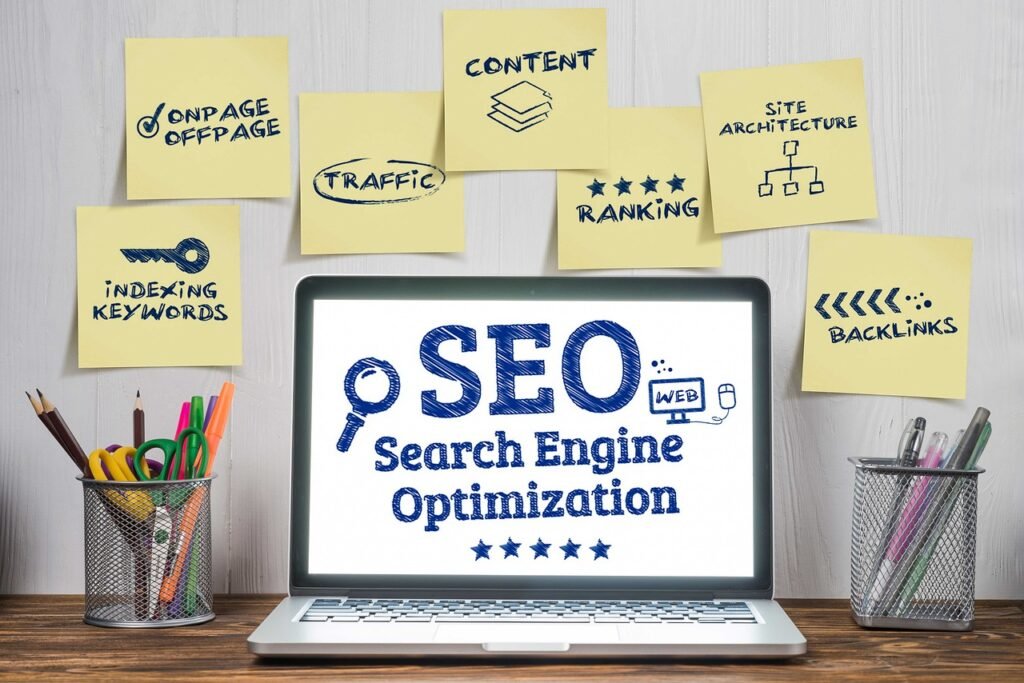
On-Page and Off-Page SEO are the two most important pillars for ranking a website. Search engines don’t magically rank websites they look at thousands of signals before deciding which page deserves to be on top. If you want your website to show up, you must understand these two types of SEO. This guide breaks everything down simply, so even beginners can take action immediately.
What Is On-Page SEO?
On-Page SEO refers to all the optimizations you control directly on your website. These elements tell Google what your content is about and how relevant it is to a user’s search.
If your on-page structure is weak, Google won’t understand your page and it won’t rank it.
Key On-Page SEO Factors
1. High-Quality, Relevant Content
Content is the foundation of SEO. Google prioritizes pages that provide value, clarity, and answers.
Your content must:
- Match search intent
- Solve real user questions
- Offer accurate, updated information
- Use natural keyword placement
- Be easy to read and skimmable
If the content doesn’t help the user, no amount of SEO hacks will save it.
2. Proper Keyword Optimization
You need to know what your audience is searching for. Use tools like Google Keyword Planner, Ubersuggest, or Ahrefs.
Place keywords in:
- Title
- URL
- First paragraph
- Headings (H1, H2)
- Image alt text
- Meta description
Don’t stuff keywords Google punishes that.
3. SEO-Friendly URL Structure
Clean, short URLs rank better.
Example of a good URL:
yourwebsite.com/on-page-off-page-seo-guide
Avoid:
yourwebsite.com/blog/12345/?seo=complete&guide773
Short, descriptive URLs improve user trust and Google visibility.
4. Title Tags and Meta Descriptions
These influence both ranking and click-through rates.
Good titles:
- Contain your main keyword
- Stay under 60 characters
- Clearly tell what the page is about
Strong meta descriptions:
- Are around 150–160 characters
- Include main keywords
- Encourage the reader to click
Think of them as your “first impression” on Google.
5. Header Tags (H1, H2, H3)
Headers organize your content and help Google understand hierarchy.
- Only one H1 per page
- Use H2 for main sections
- Use H3 for sub-points
This improves readability and SEO clarity.
6. Image Optimization
Google can’t “see” images unless you describe them.
Optimize with:
- Compressed image size
- Descriptive alt text
- Proper naming (example: on-page-seo-checklist.jpg)
This helps with ranking and accessibility.
7. Internal Linking
Internal links help Google crawl your site and keep users engaged.
Example:
Linking your “SEO Tools List” blog to your “Beginner SEO Guide.”
This improves:
- Page authority distribution
- User experience
- Crawl efficiency
8. Mobile-Friendliness
Most users browse on mobile. Google ranks mobile-optimized sites higher.
Your site must:
- Load fast
- Have readable text
- Be responsive
- Avoid pop-up clutter
A non-mobile-friendly site is basically invisible today.
Understanding On-Page and Off-Page SEO
“Beginners should focus on both On-Page and Off-Page SEO to ensure their website ranks higher, builds authority, and attracts consistent traffic.”
What Is Off-Page SEO?
While on-page SEO focuses on your website, off-page SEO happens outside your site. These are signals that tell Google whether your site is trustworthy, credible, and worth ranking.
If On-Page SEO is your foundation, Off-Page SEO is your reputation.
Key Off-Page SEO Strategies
1. Backlink Building (The Heart of Off-Page SEO)
Backlinks are links from other websites pointing to yours. They act as “votes of confidence.”
Not all backlinks are equal:
- High-quality backlinks from reputable sites boost your authority
- Spammy backlinks harm your ranking
Ways to get powerful backlinks:
- Guest posting
- HARO link building
- Creating share-worthy content
- Email outreach
- Resource page links
- Digital PR
Backlinks remain one of Google’s strongest ranking signals.
2. Social Media Signals
While social media links don’t directly affect ranking, they help increase:
- Brand visibility
- Traffic
- Content reach
- Engagement
More people sharing your content boosts indirect SEO benefits.
3. Google Business Profile (for Local SEO)
If you’re a local business, this is non-negotiable.
Optimizing your Google Business Profile helps you appear in:
- Local searches
- Google Maps
- “Near me” results
Key actions:
- Add correct business info
- Encourage customer reviews
- Post updates regularly
- Add high-quality images
4. Reviews and Online Reputation
Google trusts businesses with consistent, positive reviews.
Platforms that matter:
- Google Reviews
- Trustpilot
- Yelp
- TripAdvisor (industry-specific)
Good reviews = higher trust + better ranking.
5. Brand Mentions
Even if websites don’t link to you, brand mentions contribute to:
- Online authority
- Local SEO
- Trust signals
Google sees your brand as discussed, relevant, and active.
On-Page vs Off-Page SEO: The Real Difference
| On-Page SEO | Off-Page SEO |
|---|---|
| Controlled by you | Happens outside your website |
| Content, keywords, structure | Backlinks, mentions, reputation |
| Immediate improvements | Takes time and consistency |
| Helps Google understand content | Helps Google trust content |
| Boosts ranking potential | Boosts authority |
You need both to succeed.
How Beginners Should Start
If you’re new to SEO, follow this order:
Step 1: Master On-Page SEO
Fix your content, structure, speed, keywords, and internal linking first.
Step 2: Build High-Quality Backlinks
Start with guest posts, outreach, and link-worthy content.
Step 3: Strengthen Social Presence
Share content and build engagement.
Step 4: Build Your Brand
Encourage reviews, collaborate, and stay visible.
This combined approach builds rankings that last.
Conclusion
On-page SEO builds your website’s foundation.
Off-page SEO builds your authority and trust.
If you ignore one, the other becomes weak.
If you use both strategically, your site becomes unshakable.
SEO isn’t a one-time job it’s an ongoing system. But once you understand the basics, the growth is predictable and powerful.